5 Vue3

1.Vue3简介
2.Vue3带来了什么
1.性能的提升
打包大小减少41%
初次渲染快55%, 更新渲染快133%
内存减少54%
……
2.源码的升级
3.拥抱TypeScript
4.新的特性
Composition API(组合API)
setup配置ref与reactivewatch与watchEffectprovide与inject- ……
新的内置组件
FragmentTeleportSuspense
其他改变
- 新的生命周期钩子
data 选项应始终被声明为一个函数- 移除
keyCode支持作为 v-on 的修饰符
- ……
一、创建Vue3.0工程
1.使用 vue-cli 创建
官方文档:https://cli.vuejs.org/zh/guide/creating-a-project.html#vue-create
1
2
3
4
5
6
7
8
9
|
vue --version
npm install -g @vue/cli
vue create vue_test
cd vue_test
npm run serve
|
2.使用 vite 创建
官方文档:https://v3.cn.vuejs.org/guide/installation.html#vite
vite官网:https://vitejs.cn
- 什么是
vite?—— 新一代前端构建工具。
- 优势如下:
- 开发环境中,无需打包操作,可快速的冷启动。
- 轻量快速的热重载(
HMR)。
- 真正的按需编译,不再等待整个应用编译完成。
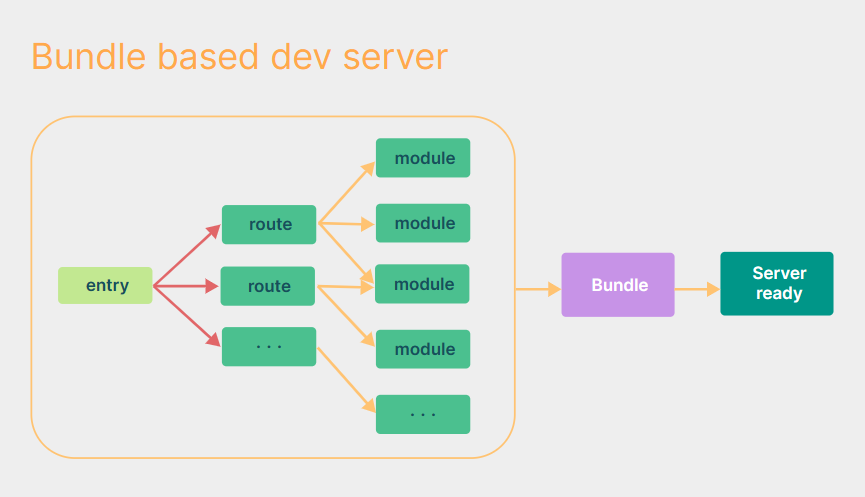
- 传统构建 与 vite构建对比图

1
2
3
4
5
6
7
8
|
npm init vite-app <project-name>
cd <project-name>
npm install
npm run dev
|
二、常用 Composition API
官方文档: https://v3.cn.vuejs.org/guide/composition-api-introduction.html
1.拉开序幕的setup
- 理解:
Vue3.0中一个新的配置项,值为一个函数。
setup是所有Composition API(组合API)“
表演的舞台 ”。- 组件中所用到的:数据、方法等等,均要配置在setup中。
setup函数的两种返回值:
- 若返回一个对象,则对象中的属性、方法, 在模板中均可以直接使用。(重点关注!)
- 若返回一个渲染函数:则可以自定义渲染内容。(了解)
- 注意点:
- 尽量不要与
Vue2.x配置混用
Vue2.x配置(data、methos、computed...)中可以访问到setup中的属性、方法。- 但在
setup中不能访问到Vue2.x配置(data、methos、computed...)。
- 如果有重名,
setup优先。
setup不能是一个async函数,因为返回值不再是return的对象, 而是promise, 模板看不到return
对象中的属性。(后期也可以返回一个Promise实例,但需要Suspense和异步组件的配合)
main.js
1
2
3
4
5
6
7
8
9
|
import {createApp} from 'vue'
import App from './App.vue'
const app = createApp(App)
app.mount('#app')
|
App.vue
1
2
3
4
5
6
7
8
9
10
11
12
13
14
15
16
17
18
19
20
21
22
23
24
25
26
27
28
29
30
31
32
33
34
35
36
37
38
39
40
41
42
43
44
45
46
47
48
49
50
51
52
53
54
55
56
57
58
59
60
61
62
63
64
65
66
67
68
69
70
71
72
73
74
| <template>
<h1>一个人的信息</h1>
<h2>姓名:{{name}}</h2>
<h2>年龄:{{age}}</h2>
<h2>性别:{{sex}}</h2>
<h2>a的值是:{{a}}</h2>
<button @click="sayHello">说话(Vue3所配置的——sayHello)</button>
<br>
<br>
<button @click="sayWelcome">说话(Vue2所配置的——sayWelcome)</button>
<br>
<br>
<button @click="test1">测试一下在Vue2的配置中去读取Vue3中的数据、方法</button>
<br>
<br>
<button @click="test2">测试一下在Vue3的setup配置中去读取Vue2中的数据、方法</button>
</template>
<script>
// import {h} from 'vue'
export default {
name: 'App',
data() {
return {
sex: '男',
a: 100
}
},
methods: {
sayWelcome() {
alert('欢迎来到尚硅谷学习')
},
test1() {
console.log(this.sex)
console.log(this.name)
console.log(this.age)
console.log(this.sayHello)
}
},
//此处只是测试一下setup,暂时不考虑响应式的问题。
async setup() {
//数据
let name = '张三'
let age = 18
let a = 200
//方法
function sayHello() {
alert(`我叫${name},我${age}岁了,你好啊!`)
}
function test2() {
console.log(name)
console.log(age)
console.log(sayHello)
console.log(this.sex)
console.log(this.sayWelcome)
}
//返回一个对象(常用)
return {
name,
age,
sayHello,
test2,
a
}
//返回一个函数(渲染函数)
// return ()=> h('h1','尚硅谷')
}
}
</script>
|
2.ref函数
- 作用: 定义一个响应式的数据
- 语法:
const xxx = ref(initValue)
- 创建一个包含响应式数据的引用对象(reference对象,简称ref对象)。
JS中操作数据: xxx.value- 模板中读取数据: 不需要.value,直接:
<div>{{xxx}}</div>
- 备注:
- 接收的数据可以是:基本类型、也可以是对象类型。
- 基本类型的数据:响应式依然是靠
Object.defineProperty()的get与set完成的。
- 对象类型的数据:内部 “ 求助 ” 了Vue3.0中的一个新函数——
reactive函数。
App.vue
1
2
3
4
5
6
7
8
9
10
11
12
13
14
15
16
17
18
19
20
21
22
23
24
25
26
27
28
29
30
31
32
33
34
35
36
37
38
39
40
41
42
43
| <template>
<h1>一个人的信息</h1>
<h2>姓名:{{name}}</h2>
<h2>年龄:{{age}}</h2>
<h3>工作种类:{{job.type}}</h3>
<h3>工作薪水:{{job.salary}}</h3>
<button @click="changeInfo">修改人的信息</button>
</template>
<script>
import {ref} from 'vue'
export default {
name: 'App',
setup() {
//数据
let name = ref('张三')
let age = ref(18)
let job = ref({
type: '前端工程师',
salary: '30K'
})
//方法
function changeInfo() {
// name.value = '李四'
// age.value = 48
console.log(job.value)
// job.value.type = 'UI设计师'
// job.value.salary = '60K'
// console.log(name,age)
}
//返回一个对象(常用)
return {
name,
age,
job,
changeInfo
}
}
}
</script>
|
3.reactive函数
- 作用: 定义一个对象类型的响应式数据(基本类型不要用它,要用
ref函数)
- 语法:
const 代理对象= reactive(源对象)接收一个对象(或数组),返回一个
代理对象(Proxy的实例对象,简称proxy对象)
reactive定义的响应式数据是“深层次的”。- 内部基于
ES6 的 Proxy 实现,通过代理对象操作源对象内部数据进行操作。
App.vue
1
2
3
4
5
6
7
8
9
10
11
12
13
14
15
16
17
18
19
20
21
22
23
24
25
26
27
28
29
30
31
32
33
34
35
36
37
38
39
40
41
42
43
44
45
46
47
48
49
50
51
| <template>
<h1>一个人的信息</h1>
<h2>姓名:{{person.name}}</h2>
<h2>年龄:{{person.age}}</h2>
<h3>工作种类:{{person.job.type}}</h3>
<h3>工作薪水:{{person.job.salary}}</h3>
<h3>爱好:{{person.hobby}}</h3>
<h3>测试的数据c:{{person.job.a.b.c}}</h3>
<button @click="changeInfo">修改人的信息</button>
</template>
<script>
import {reactive} from 'vue'
export default {
name: 'App',
setup() {
//数据
let person = reactive({
name: '张三',
age: 18,
job: {
type: '前端工程师',
salary: '30K',
a: {
b: {
c: 666
}
}
},
hobby: ['抽烟', '喝酒', '烫头']
})
//方法
function changeInfo() {
person.name = '李四'
person.age = 48
person.job.type = 'UI设计师'
person.job.salary = '60K'
person.job.a.b.c = 999
person.hobby[0] = '学习'
}
//返回一个对象(常用)
return {
person,
changeInfo
}
}
}
</script>
|
4.Vue3.0中的响应式原理
vue2.x的响应式
实现原理:
存在问题:
- 新增属性、删除属性, 界面不会更新。
- 直接通过下标修改数组, 界面不会自动更新。
Vue3.0的响应式
Vue3的响应式原理.html
1
2
3
4
5
6
7
8
9
10
11
12
13
14
15
16
17
18
19
20
21
22
23
24
25
26
27
28
29
30
31
32
33
34
35
36
37
38
39
40
41
42
43
44
45
46
47
48
49
50
51
52
53
54
55
56
57
58
59
60
61
62
63
64
65
66
67
68
69
70
71
72
73
74
75
76
77
78
79
80
81
82
83
84
85
86
87
88
89
90
91
92
93
94
95
96
97
98
99
100
101
102
103
104
| <!DOCTYPE html>
<html>
<head>
<meta charset="UTF-8"/>
<title>Document</title>
</head>
<body>
<script type="text/javascript">
let person = {
name: '张三',
age: 18
}
const p = new Proxy(person, {
get(target, propName) {
console.log(`有人读取了p身上的${propName}属性`)
return Reflect.get(target, propName)
},
set(target, propName, value) {
console.log(`有人修改了p身上的${propName}属性,我要去更新界面了!`)
Reflect.set(target, propName, value)
},
deleteProperty(target, propName) {
console.log(`有人删除了p身上的${propName}属性,我要去更新界面了!`)
return Reflect.deleteProperty(target, propName)
}
})
let obj = {a: 1, b: 2}
</script>
</body>
</html>
|
5.reactive对比ref
- 从定义数据角度对比:
ref用来定义:基本类型数据。reactive用来定义:对象(或数组)类型数据。- 备注:
ref也可以用来定义对象(或数组)类型数据,
它内部会自动通过reactive转为代理对象。
- 从原理角度对比:
ref通过Object.defineProperty()的get与set来实现响应式(数据劫持)。reactive通过使用Proxy来实现响应式(数据劫持),
并通过Reflect操作源对象内部的数据。
- 从使用角度对比:
ref定义的数据:操作数据需要.value
,读取数据时模板中直接读取不需要.value。reactive定义的数据:操作数据与读取数据:均不需要.value。
6.setup的两个注意点
setup执行的时机
- 在beforeCreate之前执行一次,this是undefined。
setup的参数
- props:值为对象,包含:组件外部传递过来,且组件内部声明接收了的属性。
- context:上下文对象
- attrs: 值为对象,包含:组件外部传递过来,但没有在props配置中声明的属性, 相当于
this.$attrs。
- slots: 收到的插槽内容, 相当于
this.$slots。
- emit: 分发自定义事件的函数, 相当于
this.$emit。
Demo.vue
1
2
3
4
5
6
7
8
9
10
11
12
13
14
15
16
17
18
19
20
21
22
23
24
25
26
27
28
29
30
31
32
33
34
35
36
37
38
39
| <template>
<h1>一个人的信息</h1>
<h2>姓名:{{person.name}}</h2>
<h2>年龄:{{person.age}}</h2>
<button @click="test">测试触发一下Demo组件的Hello事件</button>
</template>
<script>
import {reactive} from 'vue'
export default {
name: 'Demo',
props: ['msg', 'school'],
emits: ['hello'],
setup(props, context) {
// console.log('---setup---',props)
// console.log('---setup---',context)
// console.log('---setup---',context.attrs) //相当与Vue2中的$attrs
// console.log('---setup---',context.emit) //触发自定义事件的。
console.log('---setup---', context.slots) //插槽
//数据
let person = reactive({
name: '张三',
age: 18
})
//方法
function test() {
context.emit('hello', 666)
}
//返回一个对象(常用)
return {
person,
test
}
}
}
</script>
|
App.vue
1
2
3
4
5
6
7
8
9
10
11
12
13
14
15
16
17
18
19
20
21
22
23
24
25
26
27
28
| <template>
<Demo @hello="showHelloMsg" msg="你好啊" school="尚硅谷">
<template v-slot:qwe>
<span>尚硅谷</span>
</template>
<template v-slot:asd>
<span>尚硅谷</span>
</template>
</Demo>
</template>
<script>
import Demo from './components/Demo'
export default {
name: 'App',
components: {Demo},
setup() {
function showHelloMsg(value) {
alert(`你好啊,你触发了hello事件,我收到的参数是:${value}!`)
}
return {
showHelloMsg
}
}
}
</script>
|
7.计算属性与监视
1.computed函数
与Vue2.x中computed配置功能一致
写法
1
2
3
4
5
6
7
8
9
10
11
12
13
14
15
16
17
18
19
20
| import {computed} from 'vue'
setup(){
...
let fullName = computed(()=>{
return person.firstName + '-' + person.lastName
})
let fullName = computed({
get(){
return person.firstName + '-' + person.lastName
},
set(value){
const nameArr = value.split('-')
person.firstName = nameArr[0]
person.lastName = nameArr[1]
}
})
}
|
Demo.vue
1
2
3
4
5
6
7
8
9
10
11
12
13
14
15
16
17
18
19
20
21
22
23
24
25
26
27
28
29
30
31
32
33
34
35
36
37
38
39
40
41
42
43
44
45
46
| <template>
<h1>一个人的信息</h1>
姓:<input type="text" v-model="person.firstName">
<br>
名:<input type="text" v-model="person.lastName">
<br>
<span>全名:{{person.fullName}}</span>
<br>
全名:<input type="text" v-model="person.fullName">
</template>
<script>
import {reactive, computed} from 'vue'
export default {
name: 'Demo',
setup() {
//数据
let person = reactive({
firstName: '张',
lastName: '三'
})
//计算属性——简写(没有考虑计算属性被修改的情况)
/* person.fullName = computed(()=>{
return person.firstName + '-' + person.lastName
}) */
//计算属性——完整写法(考虑读和写)
person.fullName = computed({
get() {
return person.firstName + '-' + person.lastName
},
set(value) {
const nameArr = value.split('-')
person.firstName = nameArr[0]
person.lastName = nameArr[1]
}
})
//返回一个对象(常用)
return {
person
}
}
}
</script>
|
App.vue
1
2
3
4
5
6
7
8
9
10
11
12
| <template>
<Demo/>
</template>
<script>
import Demo from './components/Demo'
export default {
name: 'App',
components: {Demo},
}
</script>
|
2.watch函数
与Vue2.x中watch配置功能一致
两个小“坑”:
- 监视reactive定义的响应式数据时:oldValue无法正确获取、强制开启了深度监视(deep配置失效)。
- 监视reactive定义的响应式数据中某个属性时:deep配置有效。
1
2
3
4
5
6
7
8
9
10
11
12
13
14
15
16
17
18
19
20
21
22
23
24
25
26
27
28
29
30
31
32
|
watch(sum,(newValue,oldValue)=>{
console.log('sum变化了',newValue,oldValue)
},{immediate:true})
watch([sum,msg],(newValue,oldValue)=>{
console.log('sum或msg变化了',newValue,oldValue)
})
watch(person,(newValue,oldValue)=>{
console.log('person变化了',newValue,oldValue)
},{immediate:true,deep:false})
watch(()=>person.job,(newValue,oldValue)=>{
console.log('person的job变化了',newValue,oldValue)
},{immediate:true,deep:true})
watch([()=>person.job,()=>person.name],(newValue,oldValue)=>{
console.log('person的job变化了',newValue,oldValue)
},{immediate:true,deep:true})
watch(()=>person.job,(newValue,oldValue)=>{
console.log('person的job变化了',newValue,oldValue)
},{deep:true})
|
watch函数以及watch函数相关问题
App.vue
1
2
3
4
5
6
7
8
9
10
11
12
13
14
15
16
17
18
19
20
21
22
23
24
25
26
27
28
29
30
31
32
33
34
35
36
37
38
39
40
41
42
43
44
45
46
47
48
49
50
51
52
53
54
55
56
57
58
59
60
61
62
63
64
65
66
67
68
69
70
71
72
73
74
75
76
77
78
| <template>
<h2>当前求和为:{{sum}}</h2>
<button @click="sum++">点我+1</button>
<hr>
<h2>当前的信息为:{{msg}}</h2>
<button @click="msg+='!'">修改信息</button>
<hr>
<h2>姓名:{{person.name}}</h2>
<h2>年龄:{{person.age}}</h2>
<h2>薪资:{{person.job.j1.salary}}K</h2>
<button @click="person.name+='~'">修改姓名</button>
<button @click="person.age++">增长年龄</button>
<button @click="person.job.j1.salary++">涨薪</button>
</template>
<script>
import {ref, reactive, watch} from 'vue'
export default {
name: 'Demo',
setup() {
//数据
let sum = ref(0)
let msg = ref('你好啊')
let person = reactive({
name: '张三',
age: 18,
job: {
j1: {
salary: 20
}
}
})
//情况一:监视ref所定义的一个响应式数据
/* watch(sum,(newValue,oldValue)=>{
console.log('sum变了',newValue,oldValue)
},{immediate:true}) */
//情况二:监视ref所定义的多个响应式数据
/* watch([sum,msg],(newValue,oldValue)=>{
console.log('sum或msg变了',newValue,oldValue)
},{immediate:true}) */
/*
情况三:监视reactive所定义的一个响应式数据的全部属性
1.注意:此处无法正确的获取oldValue
2.注意:强制开启了深度监视(deep配置无效)
*/
/* watch(person,(newValue,oldValue)=>{
console.log('person变化了',newValue,oldValue)
},{deep:false}) //此处的deep配置无效 */
//情况四:监视reactive所定义的一个响应式数据中的某个属性
/* watch(()=>person.name,(newValue,oldValue)=>{
console.log('person的name变化了',newValue,oldValue)
}) */
//情况五:监视reactive所定义的一个响应式数据中的某些属性
/* watch([()=>person.name,()=>person.age],(newValue,oldValue)=>{
console.log('person的name或age变化了',newValue,oldValue)
}) */
//特殊情况
/* watch(()=>person.job,(newValue,oldValue)=>{
console.log('person的job变化了',newValue,oldValue)
},{deep:true}) //此处由于监视的是reactive素定义的对象中的某个属性,所以deep配置有效 */
//返回一个对象(常用)
return {
sum,
msg,
person
}
}
}
</script>
|
watch监视ref数据的说明
App.vue
1
2
3
4
5
6
7
8
9
10
11
12
13
14
15
16
17
18
19
20
21
22
23
24
25
26
27
28
29
30
31
32
33
34
35
36
37
38
39
40
41
42
43
44
45
46
47
48
49
50
51
52
53
54
| <template>
<h2>当前求和为:{{sum}}</h2>
<button @click="sum++">点我+1</button>
<hr>
<h2>当前的信息为:{{msg}}</h2>
<button @click="msg+='!'">修改信息</button>
<hr>
<h2>姓名:{{person.name}}</h2>
<h2>年龄:{{person.age}}</h2>
<h2>薪资:{{person.job.j1.salary}}K</h2>
<button @click="person.name+='~'">修改姓名</button>
<button @click="person.age++">增长年龄</button>
<button @click="person.job.j1.salary++">涨薪</button>
</template>
<script>
import {ref, reactive, watch} from 'vue'
export default {
name: 'Demo',
setup() {
//数据
let sum = ref(0)
let msg = ref('你好啊')
let person = ref({
name: '张三',
age: 18,
job: {
j1: {
salary: 20
}
}
})
console.log(person)
watch(sum, (newValue, oldValue) => {
console.log('sum的值变化了', newValue, oldValue)
})
watch(person, (newValue, oldValue) => {
console.log('person的值变化了', newValue, oldValue)
}, {deep: true})
//返回一个对象(常用)
return {
sum,
msg,
person
}
}
}
</script>
|
App.vue
1
2
3
4
5
6
7
8
9
10
11
12
| <template>
<Demo/>
</template>
<script>
import Demo from './components/Demo'
export default {
name: 'App',
components: {Demo},
}
</script>
|
3.watchEffect函数
Demo.vue
1
2
3
4
5
6
7
8
9
10
11
12
13
14
15
16
17
18
19
20
21
22
23
24
25
26
27
28
29
30
31
32
33
34
35
36
37
38
39
40
41
42
43
44
45
46
47
48
49
50
51
52
53
54
| <template>
<h2>当前求和为:{{sum}}</h2>
<button @click="sum++">点我+1</button>
<hr>
<h2>当前的信息为:{{msg}}</h2>
<button @click="msg+='!'">修改信息</button>
<hr>
<h2>姓名:{{person.name}}</h2>
<h2>年龄:{{person.age}}</h2>
<h2>薪资:{{person.job.j1.salary}}K</h2>
<button @click="person.name+='~'">修改姓名</button>
<button @click="person.age++">增长年龄</button>
<button @click="person.job.j1.salary++">涨薪</button>
</template>
<script>
import {ref, reactive, watch, watchEffect} from 'vue'
export default {
name: 'Demo',
setup() {
//数据
let sum = ref(0)
let msg = ref('你好啊')
let person = reactive({
name: '张三',
age: 18,
job: {
j1: {
salary: 20
}
}
})
//监视
/* watch(sum,(newValue,oldValue)=>{
console.log('sum的值变化了',newValue,oldValue)
},{immediate:true}) */
watchEffect(() => {
const x1 = sum.value
const x2 = person.job.j1.salary
console.log('watchEffect所指定的回调执行了')
})
//返回一个对象(常用)
return {
sum,
msg,
person
}
}
}
</script>
|
App.vue
1
2
3
4
5
6
7
8
9
10
11
12
| <template>
<Demo/>
</template>
<script>
import Demo from './components/Demo'
export default {
name: 'App',
components: {Demo},
}
</script>
|
8.生命周期
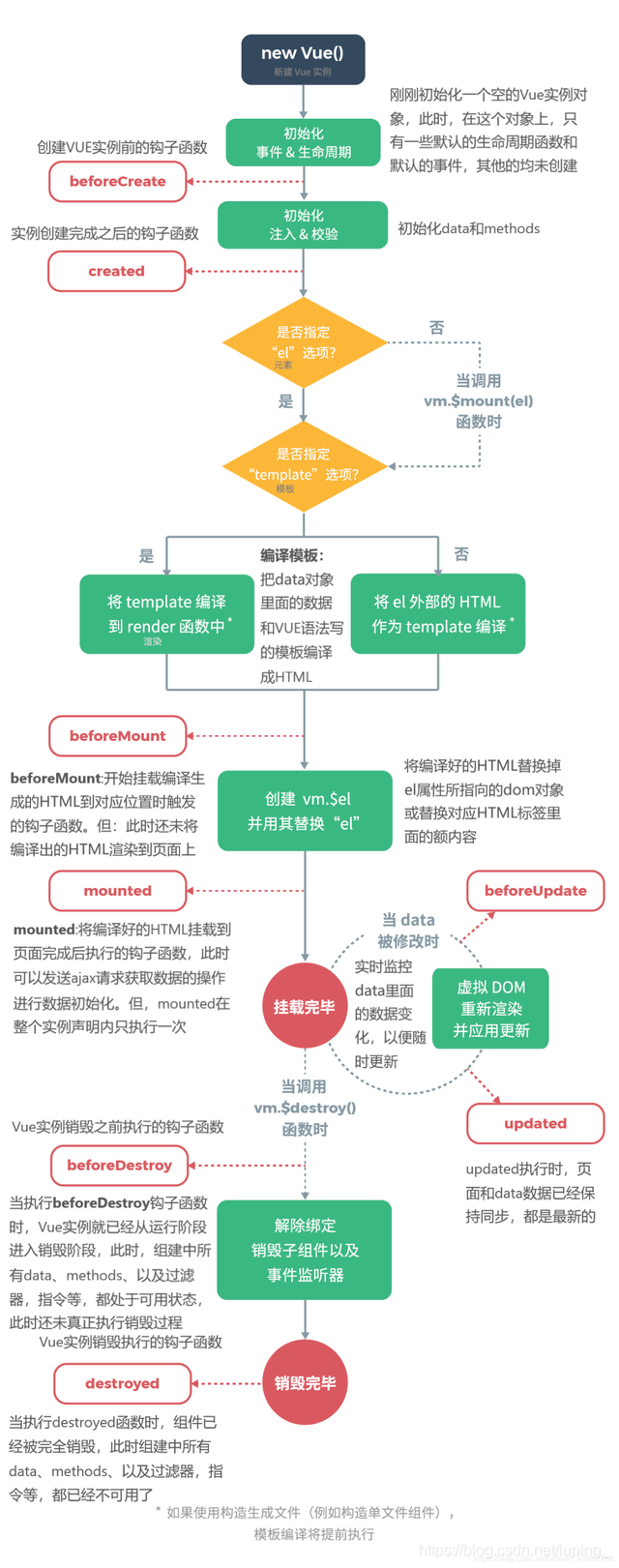

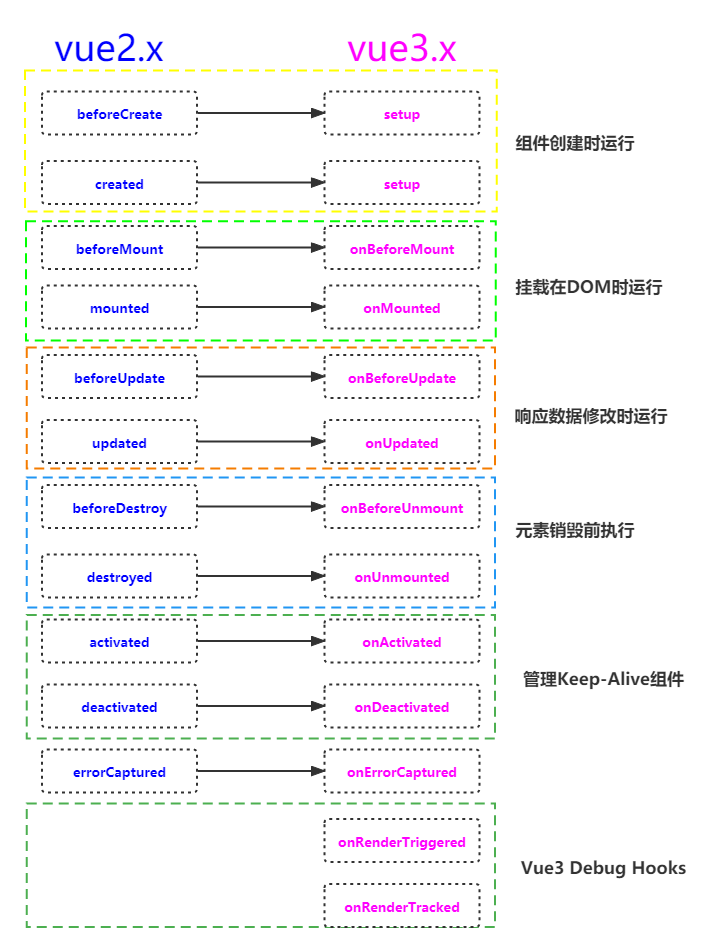
1Vue3.0中可以继续使用Vue2.x中的生命周期钩子,但有有两个被更名:
Demo.vue
1
2
3
4
5
6
7
8
9
10
11
12
13
14
15
16
17
18
19
20
21
22
23
24
25
26
27
28
29
30
31
32
33
34
35
36
37
38
39
40
41
42
43
44
45
46
47
48
49
50
51
52
53
54
55
56
57
58
59
60
61
62
63
64
65
66
67
68
| <template>
<h2>当前求和为:{{sum}}</h2>
<button @click="sum++">点我+1</button>
</template>
<script>
import {ref, onBeforeMount, onMounted, onBeforeUpdate, onUpdated, onBeforeUnmount, onUnmounted} from 'vue'
export default {
name: 'Demo',
setup() {
console.log('---setup---')
//数据
let sum = ref(0)
//通过组合式API的形式去使用生命周期钩子
onBeforeMount(() => {
console.log('---onBeforeMount---')
})
onMounted(() => {
console.log('---onMounted---')
})
onBeforeUpdate(() => {
console.log('---onBeforeUpdate---')
})
onUpdated(() => {
console.log('---onUpdated---')
})
onBeforeUnmount(() => {
console.log('---onBeforeUnmount---')
})
onUnmounted(() => {
console.log('---onUnmounted---')
})
//返回一个对象(常用)
return {sum}
},
//通过配置项的形式使用生命周期钩子
//#region
beforeCreate() {
console.log('---beforeCreate---')
},
created() {
console.log('---created---')
},
beforeMount() {
console.log('---beforeMount---')
},
mounted() {
console.log('---mounted---')
},
beforeUpdate() {
console.log('---beforeUpdate---')
},
updated() {
console.log('---updated---')
},
beforeUnmount() {
console.log('---beforeUnmount---')
},
unmounted() {
console.log('---unmounted---')
},
//#endregion
}
</script>
|
App.vue
1
2
3
4
5
6
7
8
9
10
11
12
13
14
15
16
17
18
| <template>
<button @click="isShowDemo = !isShowDemo">切换隐藏/显示</button>
<Demo v-if="isShowDemo"/>
</template>
<script>
import {ref} from 'vue'
import Demo from './components/Demo'
export default {
name: 'App',
components: {Demo},
setup() {
let isShowDemo = ref(true)
return {isShowDemo}
}
}
</script>
|
9.自定义hook函数
src/hooks/usePoint.js
1
2
3
4
5
6
7
8
9
10
11
12
13
14
15
16
17
18
19
20
21
22
23
24
25
26
27
| import {reactive, onMounted, onBeforeUnmount} from 'vue'
export default function () {
let point = reactive({
x: 0,
y: 0
})
function savePoint(event) {
point.x = event.pageX
point.y = event.pageY
console.log(event.pageX, event.pageY)
}
onMounted(() => {
window.addEventListener('click', savePoint)
})
onBeforeUnmount(() => {
window.removeEventListener('click', savePoint)
})
return point
}
|
Demo.vue
1
2
3
4
5
6
7
8
9
10
11
12
13
14
15
16
17
18
19
20
21
22
23
24
| <template>
<h2>当前求和为:{{sum}}</h2>
<button @click="sum++">点我+1</button>
<hr>
<h2>当前点击时鼠标的坐标为:x:{{point.x}},y:{{point.y}}</h2>
</template>
<script>
import {ref} from 'vue'
import usePoint from '../hooks/usePoint'
export default {
name: 'Demo',
setup() {
//数据
let sum = ref(0)
let point = usePoint()
//返回一个对象(常用)
return {sum, point}
}
}
</script>
|
Test.vue
1
2
3
4
5
6
7
8
9
10
11
12
13
14
15
16
| <template>
<h2>我是Test组件</h2>
<h2>当前点击时鼠标的坐标为:x:{{point.x}},y:{{point.y}}</h2>
</template>
<script>
import usePoint from '../hooks/usePoint'
export default {
name: 'Test',
setup() {
const point = usePoint()
return {point}
}
}
</script>
|
App.vue
1
2
3
4
5
6
7
8
9
10
11
12
13
14
15
16
17
18
19
20
21
| <template>
<button @click="isShowDemo = !isShowDemo">切换隐藏/显示</button>
<Demo v-if="isShowDemo"/>
<hr>
<Test/>
</template>
<script>
import {ref} from 'vue'
import Demo from './components/Demo'
import Test from './components/Test'
export default {
name: 'App',
components: {Demo, Test},
setup() {
let isShowDemo = ref(true)
return {isShowDemo}
}
}
</script>
|
10.toRef
作用:创建一个 ref 对象,其value值指向另一个对象中的某个属性。
语法:const name = toRef(person,'name')
应用: 要将响应式对象中的某个属性单独提供给外部使用时。
扩展:toRefs 与toRef功能一致,但可以批量创建多个 ref 对象,语法:toRefs(person)
Demo.vue
1
2
3
4
5
6
7
8
9
10
11
12
13
14
15
16
17
18
19
20
21
22
23
24
25
26
27
28
29
30
31
32
33
34
35
36
37
38
39
40
41
42
43
44
45
46
47
| <template>
<h4>{{person}}</h4>
<h2>姓名:{{name}}</h2>
<h2>年龄:{{age}}</h2>
<h2>薪资:{{job.j1.salary}}K</h2>
<button @click="name+='~'">修改姓名</button>
<button @click="age++">增长年龄</button>
<button @click="job.j1.salary++">涨薪</button>
</template>
<script>
import {ref, reactive, toRef, toRefs} from 'vue'
export default {
name: 'Demo',
setup() {
//数据
let person = reactive({
name: '张三',
age: 18,
job: {
j1: {
salary: 20
}
}
})
// const name1 = person.name
// console.log('%%%',name1)
// const name2 = toRef(person,'name')
// console.log('####',name2)
const x = toRefs(person)
console.log('******', x)
//返回一个对象(常用)
return {
person,
// name:toRef(person,'name'),
// age:toRef(person,'age'),
// salary:toRef(person.job.j1,'salary'),
...toRefs(person)
}
}
}
</script>
|
App.vue
1
2
3
4
5
6
7
8
9
10
11
12
13
14
15
16
17
18
| <template>
<button @click="isShowDemo = !isShowDemo">切换隐藏/显示</button>
<Demo v-if="isShowDemo"/>
</template>
<script>
import {ref} from 'vue'
import Demo from './components/Demo'
export default {
name: 'App',
components: {Demo},
setup() {
let isShowDemo = ref(true)
return {isShowDemo}
}
}
</script>
|
三、其它 Composition API
1.shallowReactive 与 shallowRef
Demo.vue
1
2
3
4
5
6
7
8
9
10
11
12
13
14
15
16
17
18
19
20
21
22
23
24
25
26
27
28
29
30
31
32
33
34
35
36
37
38
39
40
41
42
43
44
45
| <template>
<h4>当前的x.y值是:{{x.y}}</h4>
<button @click="x={y:888}">点我替换x</button>
<button @click="x.y++">点我x.y++</button>
<hr>
<h4>{{person}}</h4>
<h2>姓名:{{name}}</h2>
<h2>年龄:{{age}}</h2>
<h2>薪资:{{job.j1.salary}}K</h2>
<button @click="name+='~'">修改姓名</button>
<button @click="age++">增长年龄</button>
<button @click="job.j1.salary++">涨薪</button>
</template>
<script>
import {ref, reactive, toRef, toRefs, shallowReactive, shallowRef} from 'vue'
export default {
name: 'Demo',
setup() {
//数据
// let person = shallowReactive({ //只考虑第一层数据的响应式
let person = reactive({
name: '张三',
age: 18,
job: {
j1: {
salary: 20
}
}
})
let x = shallowRef({
y: 0
})
console.log('******', x)
//返回一个对象(常用)
return {
x,
person,
...toRefs(person)
}
}
}
</script>
|
App.vue
1
2
3
4
5
6
7
8
9
10
11
12
13
14
15
16
17
18
| <template>
<button @click="isShowDemo = !isShowDemo">切换隐藏/显示</button>
<Demo v-if="isShowDemo"/>
</template>
<script>
import {ref} from 'vue'
import Demo from './components/Demo'
export default {
name: 'App',
components: {Demo},
setup() {
let isShowDemo = ref(true)
return {isShowDemo}
}
}
</script>
|
2.readonly 与 shallowReadonly
- readonly: 让一个响应式数据变为只读的(深只读)。
- shallowReadonly:让一个响应式数据变为只读的(浅只读)。
- 应用场景: 不希望数据被修改时。
Demo.vue
1
2
3
4
5
6
7
8
9
10
11
12
13
14
15
16
17
18
19
20
21
22
23
24
25
26
27
28
29
30
31
32
33
34
35
36
37
38
39
40
41
42
43
| <template>
<h4>当前求和为:{{sum}}</h4>
<button @click="sum++">点我++</button>
<hr>
<h2>姓名:{{name}}</h2>
<h2>年龄:{{age}}</h2>
<h2>薪资:{{job.j1.salary}}K</h2>
<button @click="name+='~'">修改姓名</button>
<button @click="age++">增长年龄</button>
<button @click="job.j1.salary++">涨薪</button>
</template>
<script>
import {ref, reactive, toRefs, readonly, shallowReadonly} from 'vue'
export default {
name: 'Demo',
setup() {
//数据
let sum = ref(0)
let person = reactive({
name: '张三',
age: 18,
job: {
j1: {
salary: 20
}
}
})
person = readonly(person)
// person = shallowReadonly(person)
// sum = readonly(sum)
// sum = shallowReadonly(sum)
//返回一个对象(常用)
return {
sum,
...toRefs(person)
}
}
}
</script>
|
App.vue
1
2
3
4
5
6
7
8
9
10
11
12
13
14
15
16
17
18
| <template>
<button @click="isShowDemo = !isShowDemo">切换隐藏/显示</button>
<Demo v-if="isShowDemo"/>
</template>
<script>
import {ref} from 'vue'
import Demo from './components/Demo'
export default {
name: 'App',
components: {Demo},
setup() {
let isShowDemo = ref(true)
return {isShowDemo}
}
}
</script>
|
3.toRaw 与 markRaw
- toRaw:
- 作用:将一个由
reactive生成的响应式对象转为
普通对象。
- 使用场景:用于读取响应式对象对应的普通对象,对这个普通对象的所有操作,不会引起页面更新。
- markRaw:
- 作用:标记一个对象,使其永远不会再成为响应式对象。
- 应用场景:
- 有些值不应被设置为响应式的,例如复杂的第三方类库等。
- 当渲染具有不可变数据源的大列表时,跳过响应式转换可以提高性能。
Demo.vue
1
2
3
4
5
6
7
8
9
10
11
12
13
14
15
16
17
18
19
20
21
22
23
24
25
26
27
28
29
30
31
32
33
34
35
36
37
38
39
40
41
42
43
44
45
46
47
48
49
50
51
52
53
54
55
56
57
58
59
60
61
62
63
| <template>
<h4>当前求和为:{{sum}}</h4>
<button @click="sum++">点我++</button>
<hr>
<h2>姓名:{{name}}</h2>
<h2>年龄:{{age}}</h2>
<h2>薪资:{{job.j1.salary}}K</h2>
<h3 v-show="person.car">座驾信息:{{person.car}}</h3>
<button @click="name+='~'">修改姓名</button>
<button @click="age++">增长年龄</button>
<button @click="job.j1.salary++">涨薪</button>
<button @click="showRawPerson">输出最原始的person</button>
<button @click="addCar">给人添加一台车</button>
<button @click="person.car.name+='!'">换车名</button>
<button @click="changePrice">换价格</button>
</template>
<script>
import {ref, reactive, toRefs, toRaw, markRaw} from 'vue'
export default {
name: 'Demo',
setup() {
//数据
let sum = ref(0)
let person = reactive({
name: '张三',
age: 18,
job: {
j1: {
salary: 20
}
}
})
function showRawPerson() {
const p = toRaw(person)
p.age++
console.log(p)
}
function addCar() {
let car = {name: '奔驰', price: 40}
person.car = markRaw(car)
}
function changePrice() {
person.car.price++
console.log(person.car.price)
}
//返回一个对象(常用)
return {
sum,
person,
...toRefs(person),
showRawPerson,
addCar,
changePrice
}
}
}
</script>
|
App.vue
1
2
3
4
5
6
7
8
9
10
11
12
13
14
15
16
17
18
| <template>
<button @click="isShowDemo = !isShowDemo">切换隐藏/显示</button>
<Demo v-if="isShowDemo"/>
</template>
<script>
import {ref} from 'vue'
import Demo from './components/Demo'
export default {
name: 'App',
components: {Demo},
setup() {
let isShowDemo = ref(true)
return {isShowDemo}
}
}
</script>
|
4.customRef
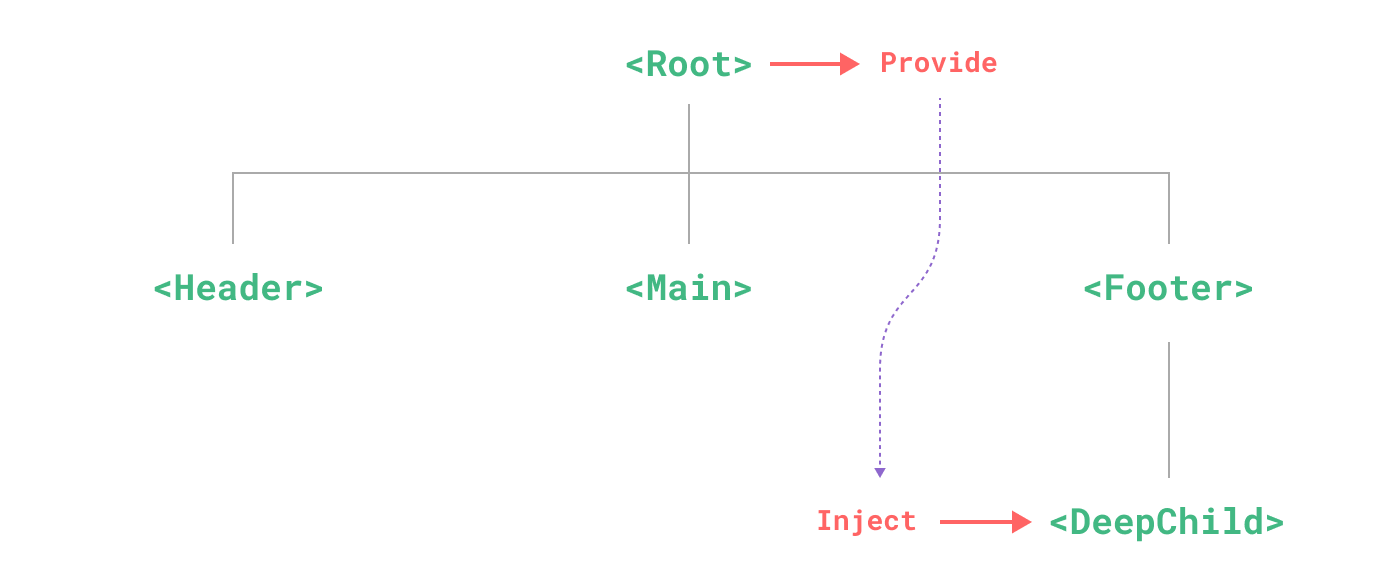
5.provide 与 inject
Child.vue
1
2
3
4
5
6
7
8
9
10
11
12
13
14
15
16
17
18
19
20
21
22
23
24
25
26
27
| <template>
<div class="child">
<h3>我是Child组件(子)</h3>
<Son/>
</div>
</template>
<script>
import {inject} from 'vue'
import Son from './Son.vue'
export default {
name: 'Child',
components: {Son},
/* setup(){
let x = inject('car')
console.log(x,'Child-----')
} */
}
</script>
<style>
.child {
background-color: skyblue;
padding: 10px;
}
</style>
|
Son.vue
1
2
3
4
5
6
7
8
9
10
11
12
13
14
15
16
17
18
19
20
21
22
23
24
| <template>
<div class="son">
<h3>我是Son组件(孙),{{car.name}}--{{car.price}}</h3>
</div>
</template>
<script>
import {inject} from 'vue'
export default {
name: 'Son',
setup() {
let car = inject('car')
return {car}
}
}
</script>
<style>
.son {
background-color: orange;
padding: 10px;
}
</style>
|
App.vue
1
2
3
4
5
6
7
8
9
10
11
12
13
14
15
16
17
18
19
20
21
22
23
24
25
26
27
28
| <template>
<div class="app">
<h3>我是App组件(祖),{{name}}--{{price}}</h3>
<Child/>
</div>
</template>
<script>
import {reactive, toRefs, provide} from 'vue'
import Child from './components/Child.vue'
export default {
name: 'App',
components: {Child},
setup() {
let car = reactive({name: '奔驰', price: '40W'})
provide('car', car) //给自己的后代组件传递数据
return {...toRefs(car)}
}
}
</script>
<style>
.app {
background-color: gray;
padding: 10px;
}
</style>
|
6.响应式数据的判断
- isRef: 检查一个值是否为一个 ref 对象
- isReactive: 检查一个对象是否是由
reactive 创建的响应式代理
- isReadonly: 检查一个对象是否是由
readonly 创建的只读代理
- isProxy: 检查一个对象是否是由
reactive 或者 readonly 方法创建的代理
App.vue
1
2
3
4
5
6
7
8
9
10
11
12
13
14
15
16
17
18
19
20
21
22
23
24
25
26
27
28
29
30
31
32
| <template>
<h3>我是App组件</h3>
</template>
<script>
import {ref, reactive, toRefs, readonly, isRef, isReactive, isReadonly, isProxy} from 'vue'
export default {
name: 'App',
setup() {
let car = reactive({name: '奔驰', price: '40W'})
let sum = ref(0)
let car2 = readonly(car)
console.log(isRef(sum))
console.log(isReactive(car))
console.log(isReadonly(car2))
console.log(isProxy(car))
console.log(isProxy(sum))
return {...toRefs(car)}
}
}
</script>
<style>
.app {
background-color: gray;
padding: 10px;
}
</style>
|
四、Composition API 的优势
1.Options API 存在的问题
使用传统OptionsAPI中,新增或者修改一个需求,就需要分别在data,methods,computed里修改 。
2.Composition API 的优势
我们可以更加优雅的组织我们的代码,函数。让相关功能的代码更加有序的组织在一起。
五、新的组件
1.Fragment
- 在Vue2中: 组件必须有一个根标签
- 在Vue3中: 组件可以没有根标签, 内部会将多个标签包含在一个Fragment虚拟元素中
- 好处: 减少标签层级, 减小内存占用
2.Teleport
Child.vue
1
2
3
4
5
6
7
8
9
10
11
12
13
14
15
16
17
18
19
20
21
22
| <template>
<div class="child">
<h3>我是Child组件</h3>
<Son/>
</div>
</template>
<script>
import Son from './Son'
export default {
name: 'Child',
components: {Son},
}
</script>
<style>
.child {
background-color: skyblue;
padding: 10px;
}
</style>
|
Son.vue
1
2
3
4
5
6
7
8
9
10
11
12
13
14
15
16
17
18
19
20
21
22
| <template>
<div class="son">
<h3>我是Son组件</h3>
<Dialog/>
</div>
</template>
<script>
import Dialog from './Dialog.vue'
export default {
name: 'Son',
components: {Dialog}
}
</script>
<style>
.son {
background-color: orange;
padding: 10px;
}
</style>
|
Dialog.vue
1
2
3
4
5
6
7
8
9
10
11
12
13
14
15
16
17
18
19
20
21
22
23
24
25
26
27
28
29
30
31
32
33
34
35
36
37
38
39
40
41
42
43
44
45
46
47
48
49
50
| <template>
<div>
<button @click="isShow = true">点我弹个窗</button>
<teleport to="body">
<div v-if="isShow" class="mask">
<div class="dialog">
<h3>我是一个弹窗</h3>
<h4>一些内容</h4>
<h4>一些内容</h4>
<h4>一些内容</h4>
<button @click="isShow = false">关闭弹窗</button>
</div>
</div>
</teleport>
</div>
</template>
<script>
import {ref} from 'vue'
export default {
name: 'Dialog',
setup() {
let isShow = ref(false)
return {isShow}
}
}
</script>
<style>
.mask {
position: absolute;
top: 0;
bottom: 0;
left: 0;
right: 0;
background-color: rgba(0, 0, 0, 0.5);
}
.dialog {
position: absolute;
top: 50%;
left: 50%;
transform: translate(-50%, -50%);
text-align: center;
width: 300px;
height: 300px;
background-color: green;
}
</style>
|
App.vue
1
2
3
4
5
6
7
8
9
10
11
12
13
14
15
16
17
18
19
20
21
22
23
24
25
26
27
28
| <template>
<div class="app">
<h3>我是App组件(祖),{{name}}--{{price}}</h3>
<Child/>
</div>
</template>
<script>
import {reactive, toRefs, provide} from 'vue'
import Child from './components/Child.vue'
export default {
name: 'App',
components: {Child},
setup() {
let car = reactive({name: '奔驰', price: '40W'})
provide('car', car) //给自己的后代组件传递数据
return {...toRefs(car)}
}
}
</script>
<style>
.app {
background-color: gray;
padding: 10px;
}
</style>
|
3.Suspense
Child.vue
1
2
3
4
5
6
7
8
9
10
11
12
13
14
15
16
17
18
19
20
21
22
23
24
25
26
27
28
29
30
| <template>
<div class="child">
<h3>我是Child组件</h3>
{{sum}}
</div>
</template>
<script>
import {ref} from 'vue'
export default {
name: 'Child',
async setup() {
let sum = ref(0)
let p = new Promise((resolve, reject) => {
setTimeout(() => {
resolve({sum})
}, 3000)
})
return await p
}
}
</script>
<style>
.child {
background-color: skyblue;
padding: 10px;
}
</style>
|
App.vue
1
2
3
4
5
6
7
8
9
10
11
12
13
14
15
16
17
18
19
20
21
22
23
24
25
26
27
28
29
30
31
| <template>
<div class="app">
<h3>我是App组件</h3>
<Suspense>
<template v-slot:default>
<Child/>
</template>
<template v-slot:fallback>
<h3>稍等,加载中...</h3>
</template>
</Suspense>
</div>
</template>
<script>
// import Child from './components/Child'//静态引入
import {defineAsyncComponent} from 'vue'
const Child = defineAsyncComponent(() => import('./components/Child')) //异步引入
export default {
name: 'App',
components: {Child},
}
</script>
<style>
.app {
background-color: gray;
padding: 10px;
}
</style>
|
六、其他
1.全局API的转移
Vue 2.x 有许多全局 API 和配置。
例如:注册全局组件、注册全局指令等。
1
2
3
4
5
6
7
8
9
10
11
12
|
Vue.component('MyButton', {
data: () => ({
count: 0
}),
template: '<button @click="count++">Clicked {{ count }} times.</button>'
})
Vue.directive('focus', {
inserted: el => el.focus()
}
|
Vue3.0中对这些API做出了调整:
2.其他改变
